Where prestige lives, where good addresses start, where you can still find entry points. A compact overview of all 23 Vienna districts, sorted by Grätzl (Viennese micro-neighborhoods) and tier classification.
€€€ Top Locations€€ Good Locations€ Entry-Level Locations
As of April 2026
Vienna is not a monolithic housing market. Between the Kohlmarkt in the first district and the Seestadt Aspern lie not only kilometers but entire worlds of residential character. This atlas sorts the city along three price segments and shows which streets rank among the top addresses, where good residential options can still be found, and where entry-level locations remain.
Where is Vienna most expensive? Which Grätzl still offer entry-level prices? Which districts combine prestige with good public transit? This atlas answers these questions district by district — no value judgments, just clear tier classification.
The classification is relative to the respective district. An „entry-level location“ in Währing remains expensive by citywide standards; a „top location“ in Simmering does not need to match the price level of the Kohlmarkt. Grätzl boundaries follow common Viennese topography and are not official.
Charakter, Grätzl, Straßen und ÖV für alle 23 Gemeindebezirke
01
Innere Stadt
1010 Wien
€€€+€€€
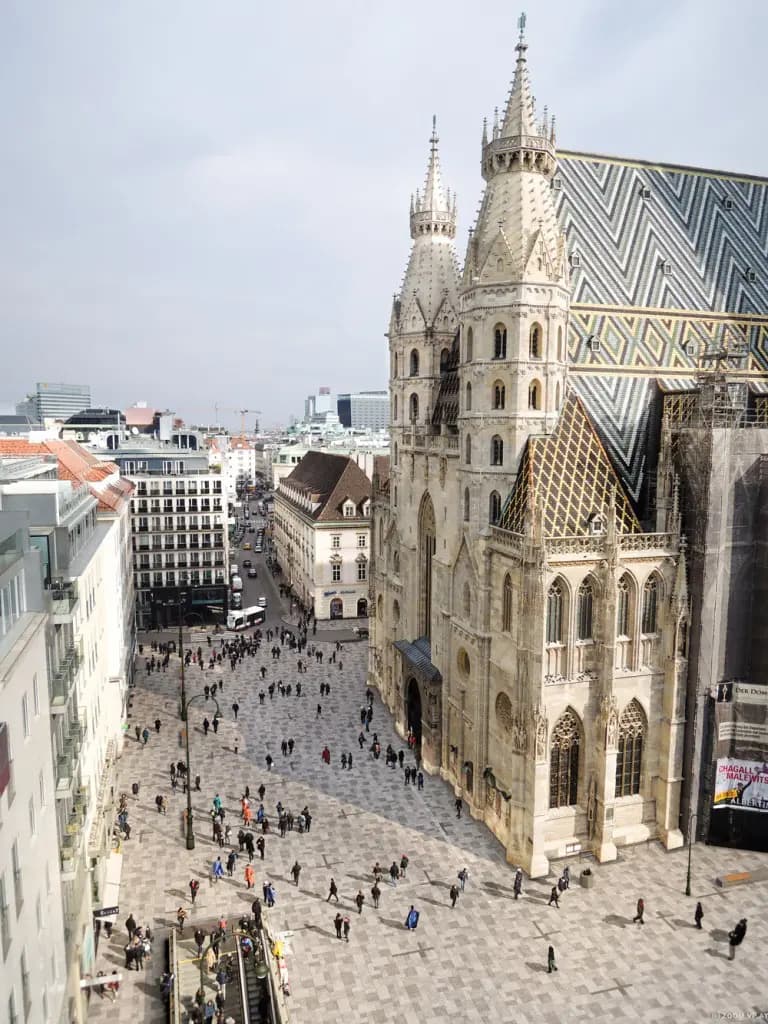
Vienna's historic and economic center. Around 16,500 residents on 2.87 km², but more than 110,000 workplaces — the district is primarily a work, government and commercial hub, not a classical residential district. UNESCO World Heritage Site since 2001. Every address in the Inner City belongs to the top price segment of the city; the tier classification reflects relative prestige within the district.
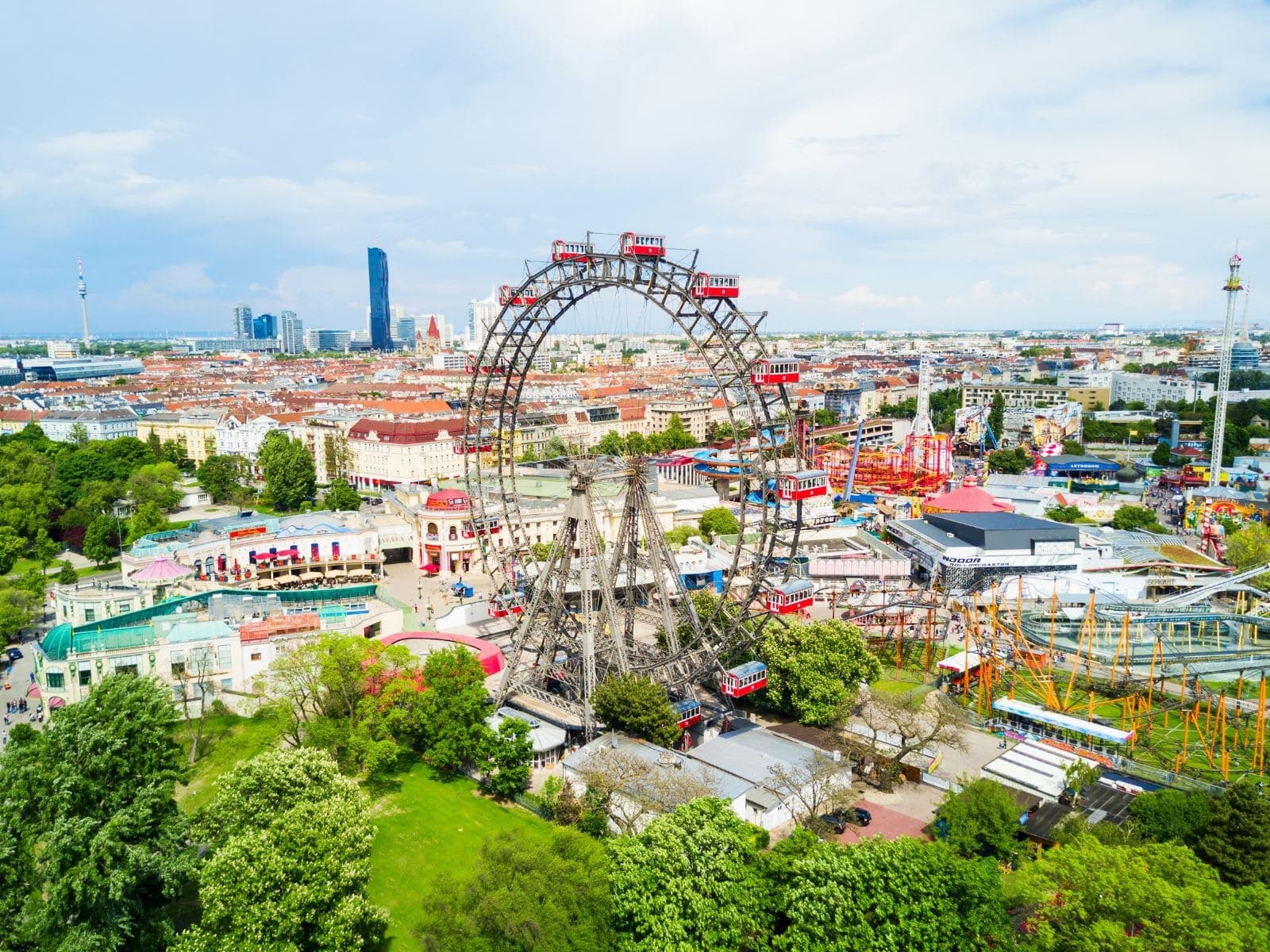
One of Vienna's greenest districts thanks to the Prater and Augarten, with dynamic development along the U1/U2 axis. An entirely new urban quarter is rising on former Nordbahnhof railway land. Rich in contrasts — prestige addresses along the Donaukanal, traditional Gründerzeit neighborhoods in transition, and new-build areas in between.
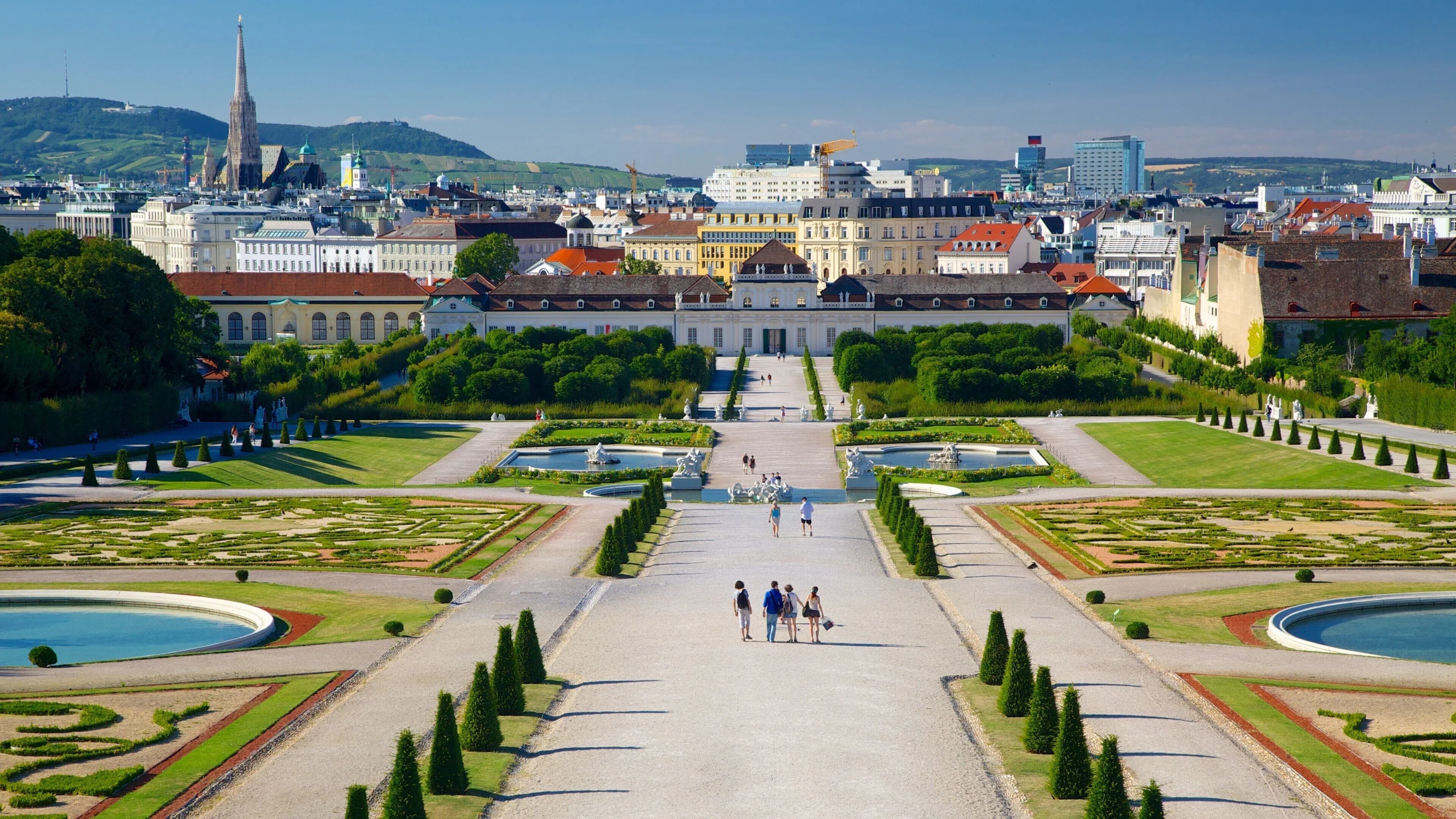
A large, heterogeneous district southeast of the Inner City (7.42 km²). In the north, the Weißgerberviertel with the Hundertwasser Building; around Belvedere, the embassy addresses; in the south, Erdberg with stronger commercial use. Concerthouse, Botanical Garden and several palaces shape the face of the district.
Grätzl
WeißgerberviertelBelvedere & DiplomatenviertelFasanviertelRochusviertel / Wien MitteErdberg
Top-Lagen €€€
Rennweg
axis to Belvedere
Ungargasse
premium Altbau
Reisnerstraße
embassy quarter
Prinz-Eugen-Straße
Belvedere-side
Fasangasse
Fasanviertel core
Gute Lagen €€
Landstraßer Hauptstraße
main shopping axis
Radetzkystraße
Weißgerberviertel
Kardinal-Nagl-Platz
near Rochus
Erdbergstraße
south · mixed
ÖV · U3/U4 Wien Mitte · U3 Rochusgasse/Kardinal-Nagl-Platz · U4 Stadtpark · S-Bahn Wien Mitte
04
Wieden
1040 Wien
€€€€€
Small (1.8 km²) but one of Vienna's densest districts — around 33,600 residents. Gründerzeit substance with few parks, but a vibrant cultural and dining scene. Upper-bourgeois flair around Karlsplatz and close to Belvedere, alongside the student-creative scene in the Freihausviertel near TU Vienna. The Karlsplatz junction (U1/U2/U4).
The highest population density in Vienna (27,540 residents/km²). Historically a district with strong worker and crafts tradition; classic Gemeindebau housing blocks line the Gürtel. Today, active gentrification around the Schlossquadrat and Schönbrunner Straße. Walking distance to the Naschmarkt and Karlsplatz.
ÖV · U4 Pilgramgasse/Kettenbrückengasse · U1 Matzleinsdorfer Platz · Bus 12A/13A/14A/59A
06
Mariahilf
1060 Wien
€€€€€
Second-smallest district by area, but with two cultural magnets: Mariahilfer Straße as Austria's largest shopping street, and the Naschmarkt as the largest inner-city market. Dense Gründerzeit construction, almost no parks, but one of the most vibrant dining and cultural scenes. Several premium new-build projects in side streets.
Grätzl
Naschmarkt-GrätzlMariahilfer StraßeGumpendorfGürtel-adjacent area
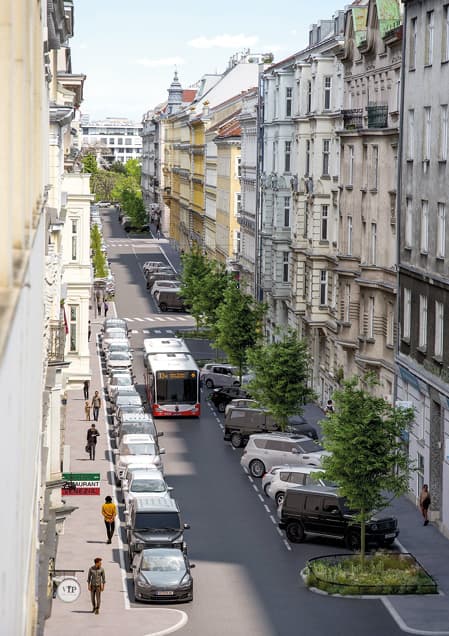
Vienna's densest creative district, right next to the Inner City. More than half of the approximately 31,500 residents are under 40, with a high share of students and academics. Lively ground-floor zones with design, gastronomy and specialty shops. Walking distance to the MuseumsQuartier and the Ring. The Neubaugasse has been a shared-space zone since 2021.
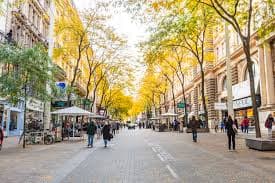
Vienna's smallest district by area (1.09 km²) and one of the quietest. Academic-bourgeois character right next to the City Hall, Parliament, University of Vienna and AKH. Stages (Theater in der Josefstadt), cafés and small boutiques in dense Gründerzeit construction. Part of the Lange Gasse has been a shared-space zone since 2018.
Grätzl
PiaristenviertelLaudonviertelAlbertviertel
Top-Lagen €€€
Lange Gasse
Piaristenviertel · shared space
Piaristengasse
at Maria Treu
Florianigasse
residential core
Albertgasse
Altbau premium
Fuhrmannsgasse
Gründerzeit gem
Stolzenthalergasse
Erstbezug cluster
Laudongasse
at Schönborn-Park
Gute Lagen €€
Josefstädter Straße
main artery
Lerchenfelder Straße
border with the 7th
Alser Straße
border with the 9th · at AKH
Breitenfelder Gasse
at the university
Skodagasse
near Gürtel
ÖV · U2 Rathaus/Lerchenfelder Straße · U6 Josefstädter Straße/Alser Straße · Tram 2/44/46
09
Alsergrund
1090 Wien
€€€€€
Classic bourgeois-academic district bordering the Inner City, with strong university and medical tradition: University of Vienna, Berggasse 19, AKH and Palais Liechtenstein. Stable high-end housing market with well-maintained late-19th-century Altbau buildings. The Servitengasse was redesigned in 2023 as a climate-friendly Grätzl center.
ÖV · U2 Schottentor/Schottenring · U4 Roßauer Lände/Friedensbrücke · U6 Alser Straße
10
Favoriten
1100 Wien
€€€
Vienna's most populous district (around 220,400 residents) and one of the largest by area (31.8 km²). Multiculturally vibrant, with industrial heritage and strong current dynamics in the north: Hauptbahnhof, Sonnwendviertel with around 4,265 apartments, Quartier Belvedere. In the south, almost village-like Oberlaa with its Kurpark. Vienna's first Supergrätzl is here around Herzgasse.
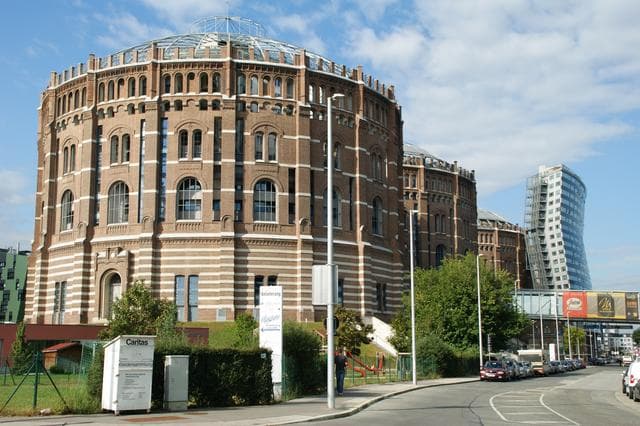
In Vienna's southeast, with industrial heritage and a strong residential character. Defining places: the Wiener Zentralfriedhof (the largest cemetery in Austria), the four converted Gasometers as a mixed residential-shopping-cultural complex, the historic Neugebäude, and the Simmeringer Haide with its traditional vegetable farming.
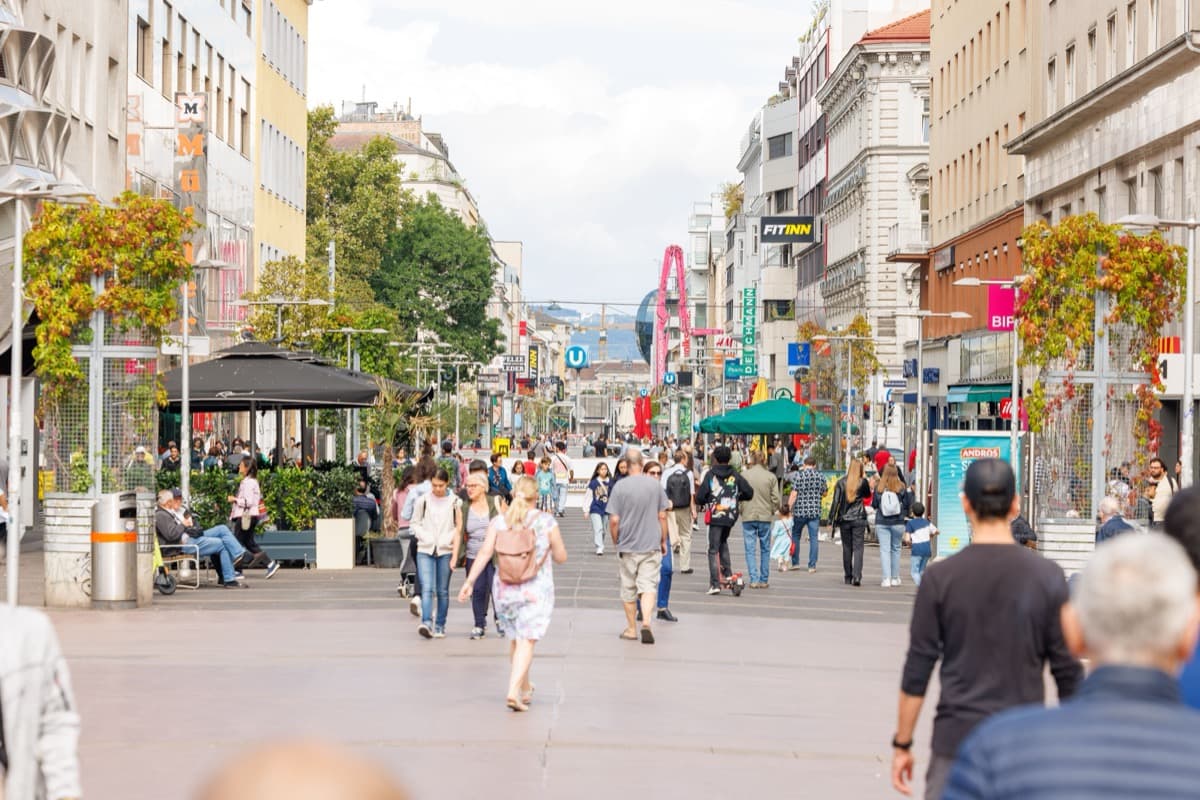
„Urban and village-like“ — that's how market reports describe the district. In the north, dense residential construction and the lively Meidlinger Hauptstraße (pedestrian zone with market, cafés and shops). In the south, the former villages of Hetzendorf and Altmannsdorf, with Schloss Hetzendorf (Vienna Fashion School). Over 40 parks, strong transit via the Längenfeldgasse junction (U4/U6).
One of Vienna's most traditional villa districts. The lowest population density in the city, plenty of greenery, Schloss Schönbrunn at the northern and the Lainzer Tiergarten at the western border. Multi-faceted: elegant Altbau and villas in Alt-Hietzing and the Hietzinger Cottage, family-friendly neighborhoods in Lainz and Ober St. Veit, modern new-build projects in Auhof and Hacking.
Grätzl
Alt-HietzingHietzinger CottageOber St. VeitUnter St. VeitLainzSpeisingAuhof / HackingGemeindeberg / Rosenhügel
Top-Lagen €€€
Hietzinger Hauptstraße
main axis · villas
Gloriettegasse
at Schönbrunn
Fasangartengasse
Alt-Hietzing
Münichreiterstraße
Cottage · villas
Seuttergasse
villa location
Lainzer Straße (central)
to Ober St. Veit · Lainz
Hanselmayergasse
premium segment
Gute Lagen €€
Hietzinger Kai
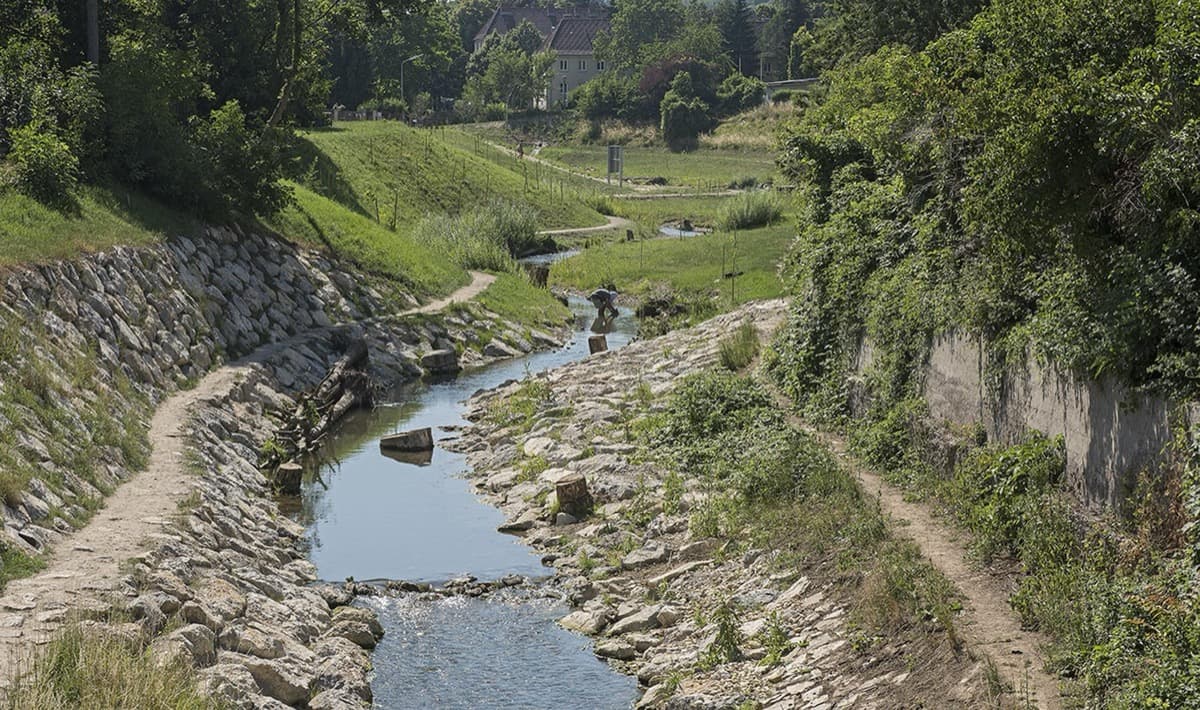
at the Wienfluss
Schweizertalstraße
city views
Waidhausenstraße
periphery
Joseph-Lister-Gasse
quiet residential street
Gemeindeberggasse
border with the 23rd
ÖV · U4 Hietzing/Braunschweiggasse/Ober St. Veit/Unter St. Veit/Hütteldorf · Tram 60/62 · S50 Westbahn
14
Penzing
1140 Wien
€€€
Large, geographically heterogeneous district: in the east, dense Gründerzeit (Breitensee, Penzing-Zentrum); in the center, the Otto-Wagner-Areal (former Steinhof, now Klinik Penzing plus residential quarter) with the golden dome of Kirche am Steinhof; in the west, hillside villas (Satzberg, Wolfersberg) and the village-like Hadersdorf-Weidlingau on the Wienerwald.
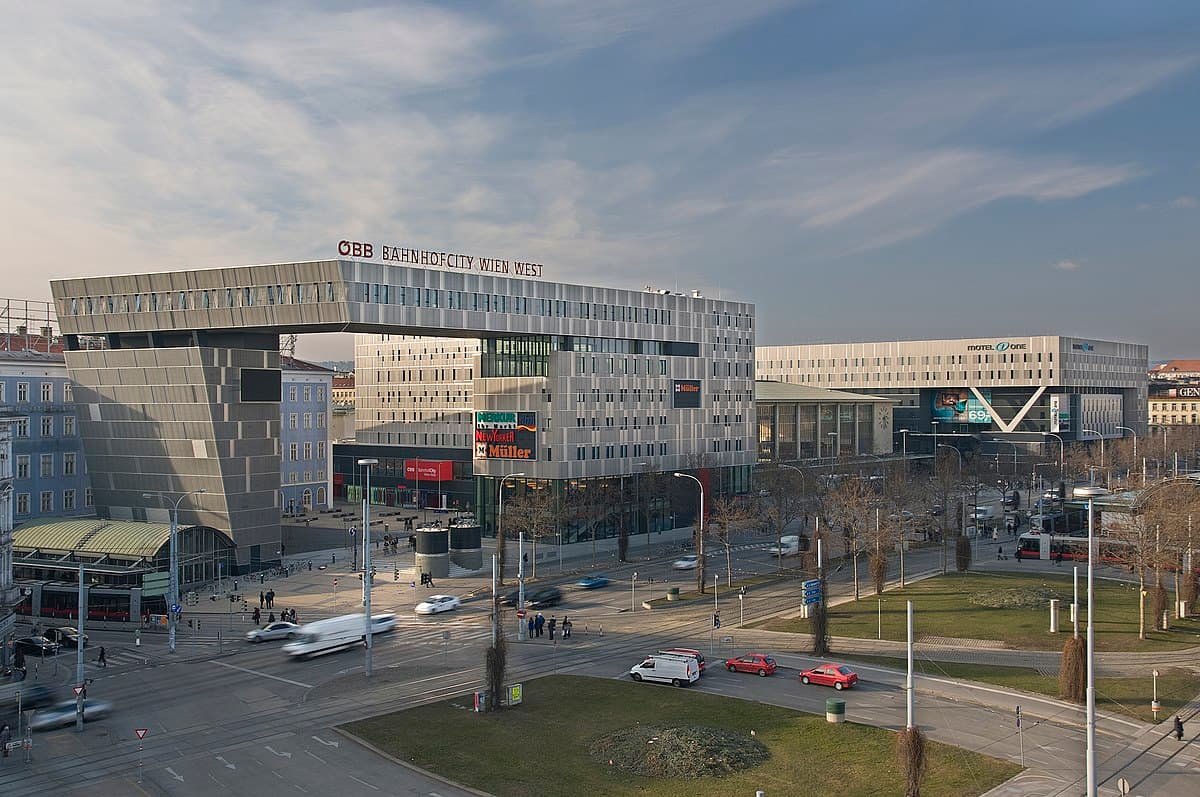
Classic Viennese Grätzl area with notable dining density and no major tourist pull — but home to Austria's largest event complex, the Wiener Stadthalle. 2026 host of the Eurovision Song Contest (12, 14 and 16 May). Dense Gründerzeit construction, strong transit via U3 Westbahnhof and U6 Burggasse-Stadthalle.
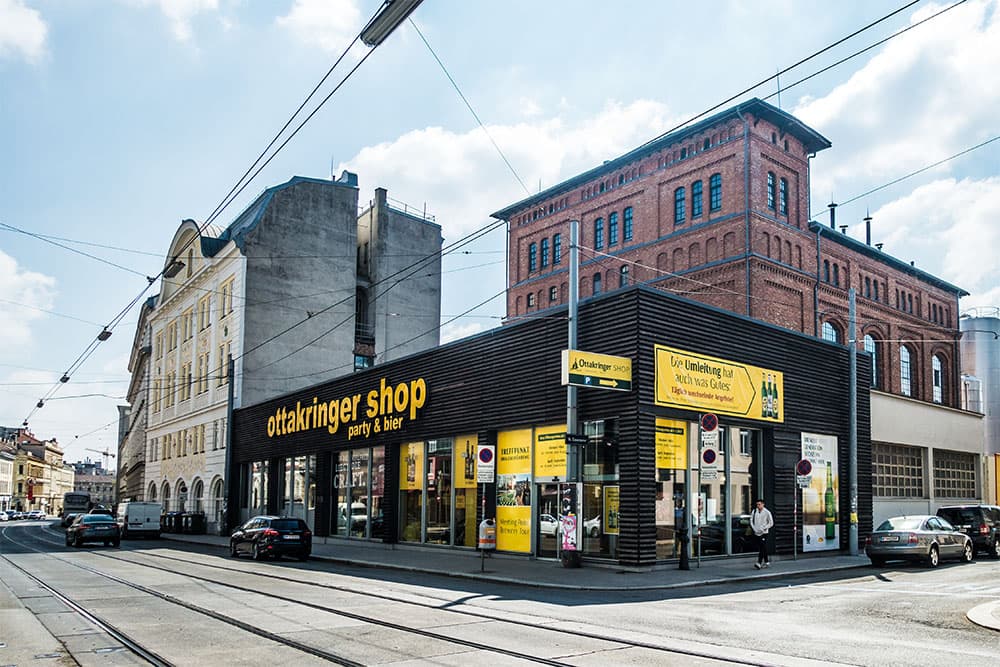
A district full of contrasts: from the lively melting pot around the Brunnenmarkt and Yppenplatz, to the suburban villas on the Wilhelminenberg. The western part extends into the Wienerwald, with 36% green cover. Ottakringer Straße is a student dining strip. Several premium projects around the Wilhelminenberg, where Cottage-style villas with city views rank among Vienna's most sought-after locations.
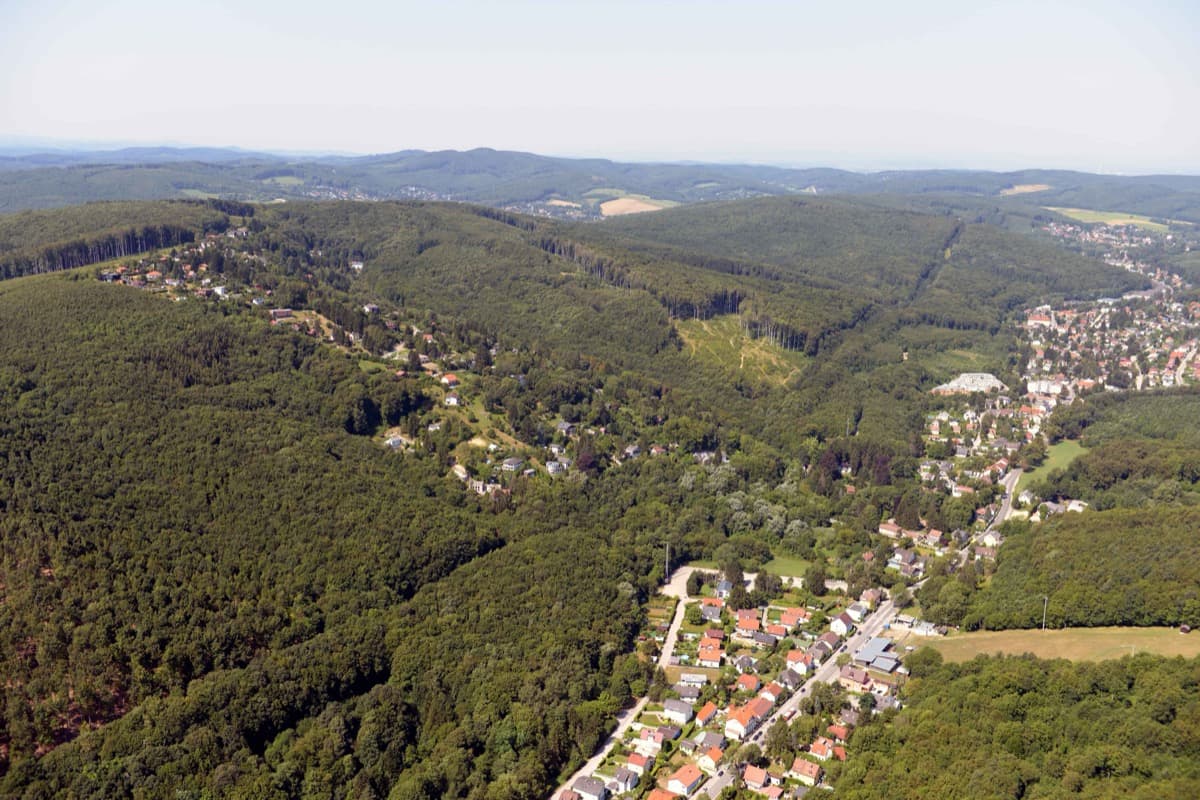
Residential district in the northwest with a strong gradient: dense Altbau around Elterleinplatz and the Gürtel, green villa slopes in Dornbach and Neuwaldegg at the Wienerwald. Strong academic and family component. Good transit via tram lines and the S45 Vorortelinie.
ÖV · Tram 43 Hernalser Hauptstraße · S45 Hernals · Tram 44/9 · bus to Neuwaldegg
18
Währing
1180 Wien
€€€€€
One of Vienna's most expensive residential districts. Classic academic profile: BOKU at Türkenschanzpark, reputable schools, numerous parks (Pötzleinsdorfer Schlosspark, Sternwartepark). The Cottageviertel, with villas in the English country-house style, spans Währing and Döbling and belongs to the city's most exclusive residential quarters. Arthur Schnitzler and Peter Alexander lived here.
A classic noble district that extends to Kahlenberg and the Wienerwald. Two Heurigen villages — Grinzing and Sievering — with preserved winemaking tradition. Cottageviertel in the south (partly shared with Währing), Hohe Warte as a historic premium address, Heiligenstadt with Beethoven memorials.
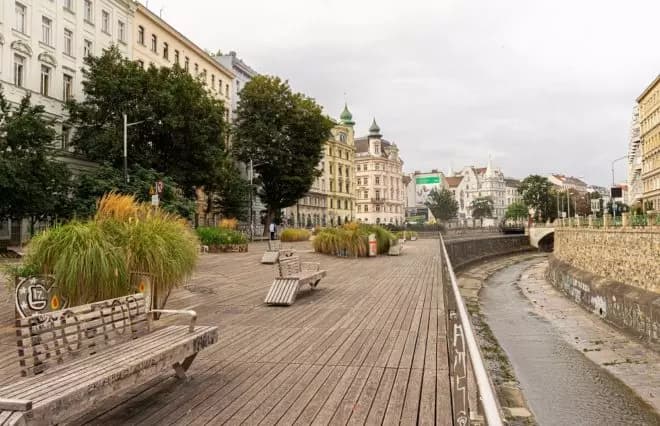
Located between the Donaukanal and the Donau — water on both sides. Dense Gründerzeit combined with the Millennium Tower and modern residential projects at Handelskai. Active upgrading through WieNeu+ „Grätzl 20+2“ jointly with the 2nd district. Good transit via U4 Friedensbrücke and U6.
Large district north of the Danube (44.5 km²), composed of formerly independent villages with very different characters: from urban Floridsdorf-Zentrum around Franz-Jonas-Platz (U6/S-Bahn hub) to the winemaking village of Stammersdorf with Heurigen taverns and wine cellars on the Bisamberg. Schwarze Lackenau is Vienna's only district part without communal housing.
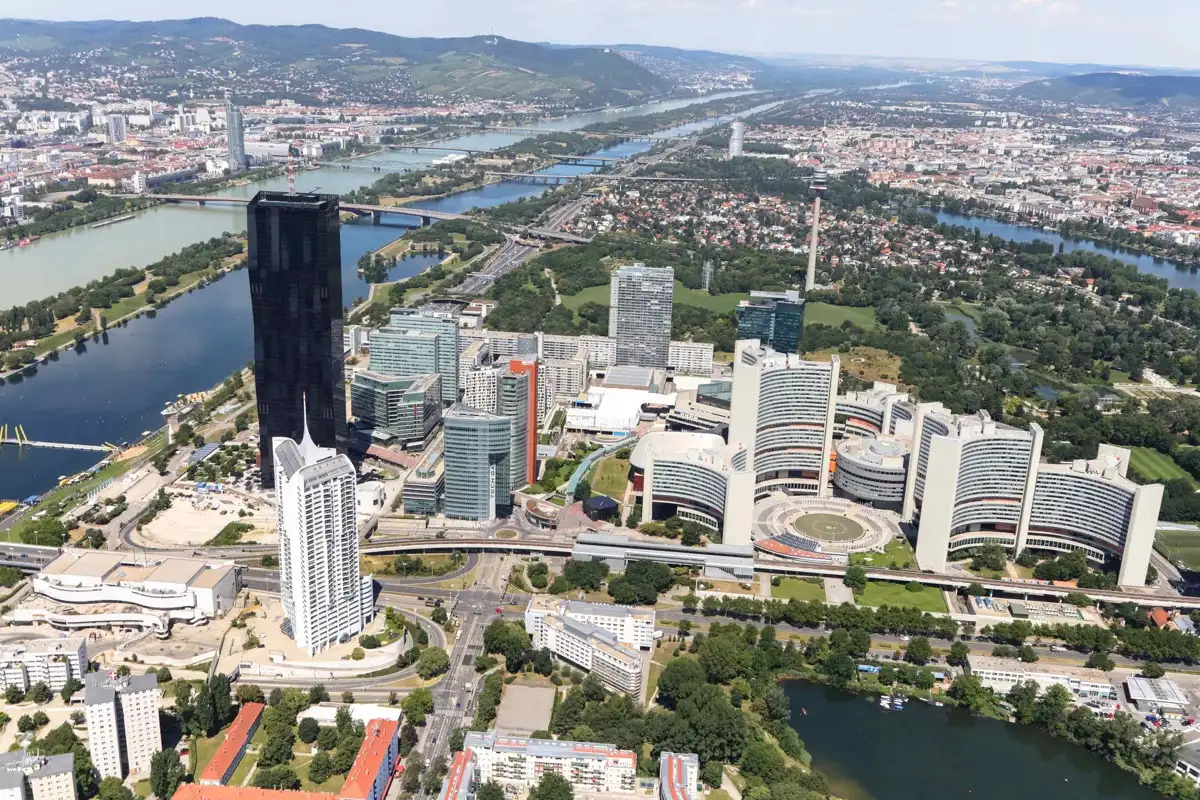
Vienna's largest district (102.30 km², 24.6% of the city area) and one of the fastest-growing. Three defining elements: the Donau City high-rise quarter (offices and residential, home to the UN complex), the Seestadt Aspern (one of Europe's largest urban development projects), and natural areas in the Lobau as part of the Donau-Auen National Park. 59% of the district is green.
Vienna's southernmost district, with a three-part profile: villa quarters in Mauer and Rodaun at the Wienerwald (comparable to Hietzing), the famous Wohnpark Alt-Erlaa from the 1970s as a „city within a city“ with around 10,000 residents in six terraced high-rises, and mixed residential-commercial areas in the southeast. U6 connects the district with the city.
The tier classification (€€€/€€/€) is based on publicly available data and our own editorial research. Price indications are asking-price benchmarks, not transaction prices. Grätzl boundaries follow common Viennese topography and are not official. The classification is relative to the respective district and serves as orientation, not as a valuation of individual properties.
Disclaimer
This article does not constitute legal, tax or investment advice. METROX is not a real estate broker.