
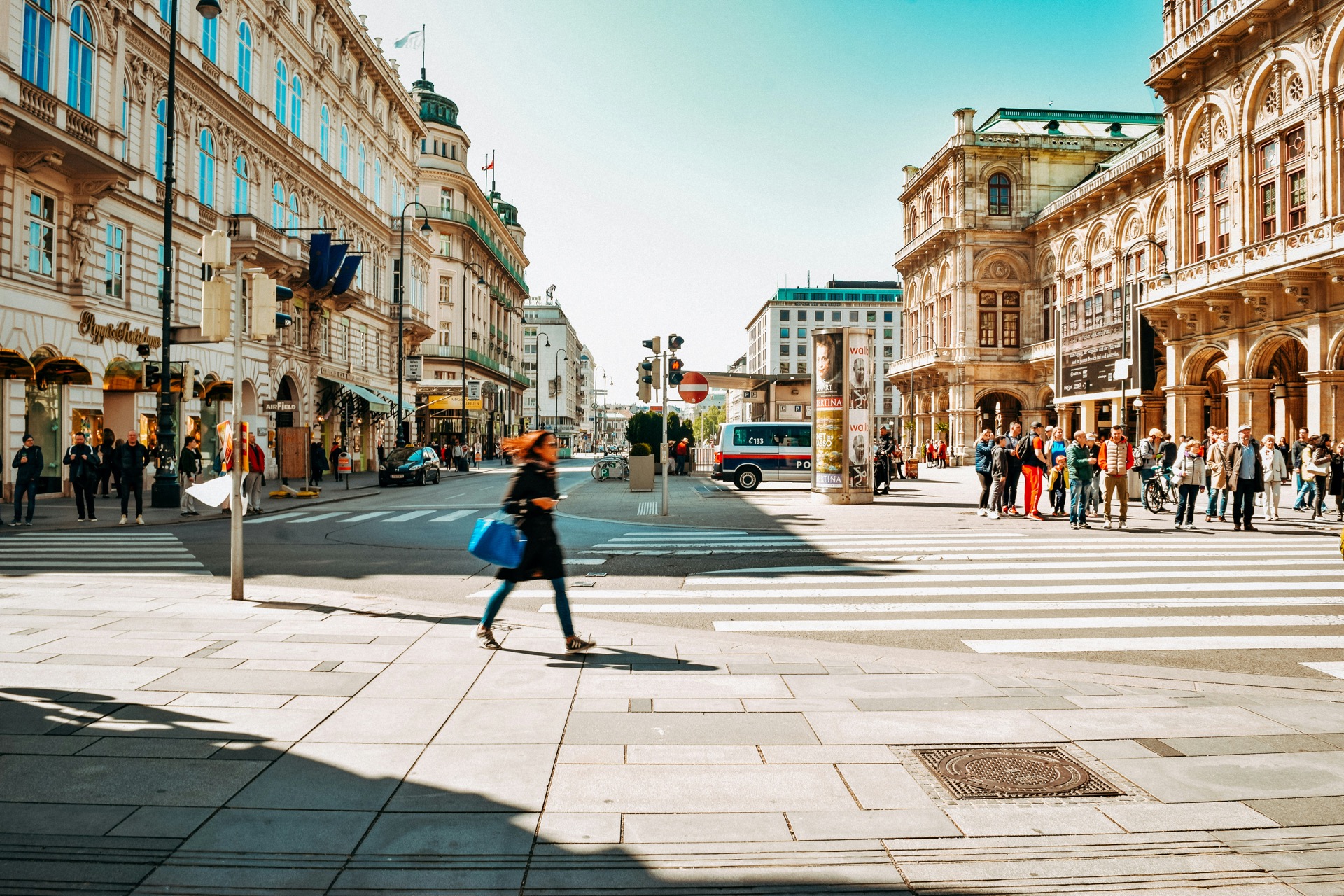
Best districts to buy property in Vienna in 2026 — a data-driven guide
Not all Vienna districts are created equal. With prices ranging from €4,500 to €16,000 per square meter, choosing the right Bezirk can make or break your investment. We analyzed all 23 districts using the METROX demand index, price trends, and infrastructure data.
Vienna sits at a crossroads. Mortgage rates have dipped below 3%, the ECB is signaling further cuts, and new construction has collapsed to just 1,800 rental units in 2025 — a fraction of what the city needs. For buyers, the window is opening. But the question isn't whether to buy in Vienna. It's where.
The citywide average of €6,700 per square meter is misleading. Walk ten minutes in one direction and you're paying €16,000/m² in the 1st district. Walk the other way and you're at €4,500 in Favoriten. We used the METROX demand index — which tracks search volume, listing activity, and transaction velocity across all 23 districts — to identify where the smartest money is moving right now.
The top tier: districts where demand outpaces supply. Innere Stadt (1st) leads with a METROX demand index of 73 and average prices around €16,400/m². But this is trophy territory — low yields, high capital preservation. More interesting for investors: Neubau (7th) scores 71 on our index with prices at €7,800/m², driven by its cultural appeal, walkability, and proximity to MuseumsQuartier. Properties here move in 21 days on average.
Leopoldstadt (2nd) is the breakout story of 2026. The Nordbahnviertel development is transforming this district from affordable alternative to genuine hot spot. Current prices sit at €5,455/m², but analysts project 3–5% annual growth over the next five years — cumulative gains of 25–35%. The METROX index reads 65, up from 54 a year ago. The demographic shift is clear: young professionals and international buyers are flooding in.
Favoriten (10th) is Vienna's most populous district and its biggest transformation story. The Sonnwendviertel near Hauptbahnhof has become a magnet for first-time buyers. At €4,800–5,000/m², entry costs are 30% below the city average. The METROX demand index has jumped 8 positions in Q1, driven by renovation programs and improving infrastructure. Expected growth: 2–4% annually.
How to buy property in Vienna as a foreigner — the complete 2026 guide
Donaustadt (22nd) plays the long game. Aspern Seestadt — one of Europe's largest urban development projects — is slowly delivering on its promise. Prices average €7,295/m² (higher than you'd expect for an outer district), but the U2 metro extension is the catalyst. Land prices near planned stations have already surged 18%. For patient investors with a 5–10 year horizon, this could be Vienna's highest-growth district.
The value picks: Floridsdorf (21st) and Liesing (23rd) offer the highest rental yields in Vienna at 3.8–4.2% gross, compared to 2.5–3% in inner districts. Prices hover at €4,500–5,500/m², making them accessible for buy-to-let strategies. The trade-off is slower capital appreciation — but if cash flow is your priority, these districts deliver.
The emerging corridor: districts along the future U2/U5 metro expansion — particularly the 5th (Margareten), 9th (Alsergrund), and 15th (Rudolfsheim-Fünfhaus) — are showing the strongest price momentum. Alsergrund has seen 4–5% year-over-year growth, outpacing the city average by nearly double. These districts combine central location with relative affordability, a combination that rarely lasts.
What the METROX data reveals about timing: the demand-to-supply ratio has crossed 1.2× citywide, firmly in "warming up" territory. In Neubau and Josefstadt, it exceeds 1.8× — meaning 80% more buyers than available properties. RE/MAX projects 4.2% price growth for Vienna in 2026, but district-level data suggests the spread will be much wider. The best-positioned districts could see 5–7%, while neglected areas may lag at 1–2%.
The bottom line for buyers in 2026: Vienna remains 30–40% cheaper than Munich, Zurich, or Amsterdam for comparable quality. The structural undersupply isn't going away — fewer than 35,000 new units are forecast through 2027. Every district tells a different story, but the data points to one conclusion: the longer you wait, the fewer affordable options remain. Choose your Bezirk wisely, and let the numbers — not the hype — guide your decision.
Related Stories
Vienna apartment prices climb 3.2% in Q1 2026 — where the market is heading next
METROX Research
Inner city hits record price per sqm in Q1 2026 — €22,400 average
Immobilien Magazin
How to buy property in Vienna as a foreigner — the complete 2026 guide
METROX Research
Nordbahnhof development: 1,200 new units planned by 2028
Der Standard
Stay informed
Weekly market digest — top headlines, index changes, and district alerts.